Tag: learning

SQL resources (free courses, books, & cheat sheets)

SQL resources (free courses, books, & cheat sheets)

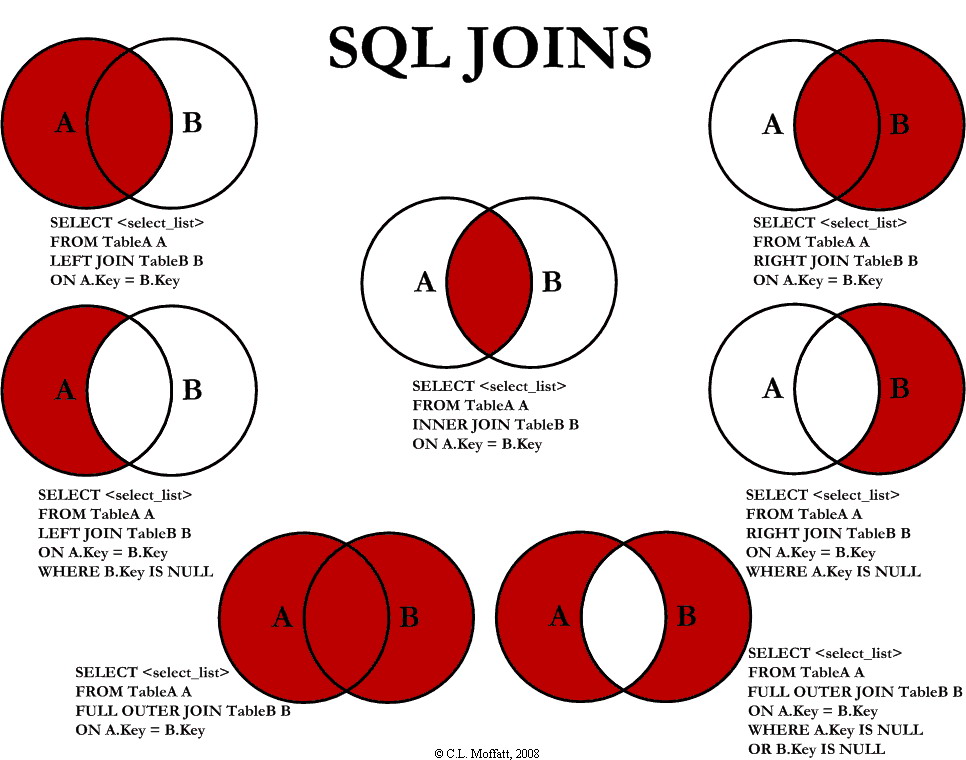
My list of SQL resources is still quite short so if you have additions, please comment below or contact me! There are separate overviews for Data Science, Machine Learning, & Statistics resources and for R resources and Python resources.

LAST UPDATED: 11-11-2018

Cheat sheets:

Courses:

Books:

AI at MIT (2010/2015): Part 1 – Introduction

AI at MIT (2010/2015): Part 1 – Introduction

Massachusetts Institute of Technology (MIT) hosts their entire 2010 course on artificial intelligence / machine learning by Professor Patrick Winston on YouTube. Although some parts seem already kind of dated seven years later, the videos on several evolving topics (e.g., Neural Networks) have been updated in the fall of 2015. The tutorial assignments you can find at the course website. Requirements for the course include experience with Python programming and an understanding of search algorithms (depth-first, breadth-first, uniform-cost, A*), basic probability, state estimation, the chain rule, partial derivatives, and dot products.

Below is the first, introductory lecture, which provides a short introduction to the history and concept of artificial intelligence:
AI is about algorithms enabled by constraints exposed by representations that support models targeted at loops that tie together thinking, perception and action.

Video: Bias in Machine Learning

Video: Bias in Machine Learning

Mainstream media have caught onto the difficulties of machine learning. Most saliently, they just love to report how AI and bots can be as racist, discriminatory, or biased as humans. Some examples:

Instead of arguing to shut down all bots, I would prefer news outlets to to explain what’s really happening. However, this can be quite difficult and complex, especially when the audience has no knowledge of machine learning. Fortunately, I found the video below, where some people at Google provide a really good laymen explanation as to how bias slips into our machine learning models. It covers interaction bias (where the human-machine interactions bias the learner)latent bias (where unobserved patterns in the learning data cause bias), and selection bias (where the selected learning sample isn’t representative of the population). Can you try and figure out which one(s) apply to the news articles above?


Python resources (free courses, books, & cheat sheets)

Python resources (free courses, books, & cheat sheets)

Find more comprehensive Python repositories:
Vinta’s awesome Python Github repository, the easy Python docs, the Python Wiki Beginners Guide, or CourseDuck’s overview of free Python courses!

My list of Python resources is still quite short so if you have additions, please comment below or contact me! There are separate overviews for Data Science, Machine Learning, & Statistics resources in general, and for R resources and SQL resources in specific.

LAST UPDATED: 11-11-2018

Cheat sheets:

Courses:

Books:

Data Science, Machine Learning, & Statistics resources (free courses, books, tutorials, & cheat sheets)

Data Science, Machine Learning, & Statistics resources (free courses, books, tutorials, & cheat sheets)

Welcome to my repository of data science, machine learning, and statistics resources. Software-specific material has to a large extent been listed under their respective overviews: R Resources & Python Resources. I also host a list of SQL Resources and datasets to practice programming. If you have any additions, please comment or contact me!

LAST UPDATED: 21-05-2018

Courses:

Video:

Books:

Sentiment Lexicons:

Cheatsheets:

Other:

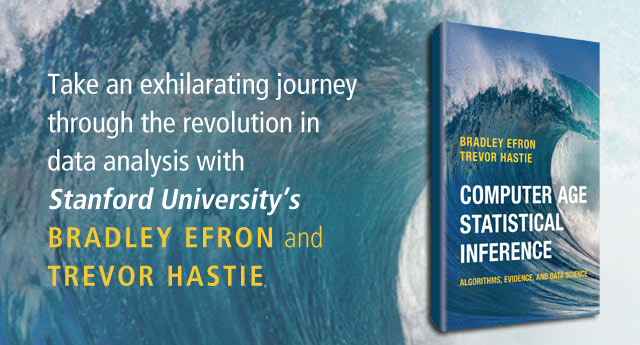
Must read: Computer Age Statistical Inference (Efron & Hastie, 2016)

Must read: Computer Age Statistical Inference (Efron & Hastie, 2016)

Statistics, and statistical inference in specific, are becoming an ever greater part of our daily lives. Models are trying to estimate anything from (future) consumer behaviour to optimal steering behaviours and we need these models to be as accurate as possible. Trevor Hastie is a great contributor to the development of the field, and I highly recommend the machine learning books and courses that he developed, together with Robert Tibshirani. These you may find in my list of R Resources (Cheatsheets, Tutorials, & Books).

Today I wanted to share another book Hastie wrote, together with Bradley Efron, another colleague of his at Stanford University. It is called Computer Age Statistical Inference (Efron & Hastie, 2016) and is a definite must read for every aspiring data scientist because it illustrates most algorithms commonly used in modern-day statistical inference. Many of these algorithms Hastie and his colleagues at Stanford developed themselves and the book handles among others:

  • Regression:
    • Logistic regression
    • Poisson regression
    • Ridge regression
    • Jackknife regression
    • Least angle regression
    • Lasso regression
    • Regression trees
  • Bootstrapping
  • Boosting
  • Cross-validation
  • Random forests
  • Survival analysis
  • Support vector machines
  • Kernel smoothing
  • Neural networks
  • Deep learning
  • Bayesian statistics