Talent.Works is back, elaborating on the applicant characteristics that relate to landing an interview. While the majority of applicants has a meager ~2% chance of getting invited to an interview, some applicants do way better! What accounts for their success?
A few weeks ago, Magic Sudoku was released for iOS11. This app by a company named Hatchlings automatically solves sudoku puzzles using a combination of Computer Vision, Machine Learning, and Augmented Reality. The app works on iPad Pro’s and iPhone 6s or above and can be downloaded from the App Store.
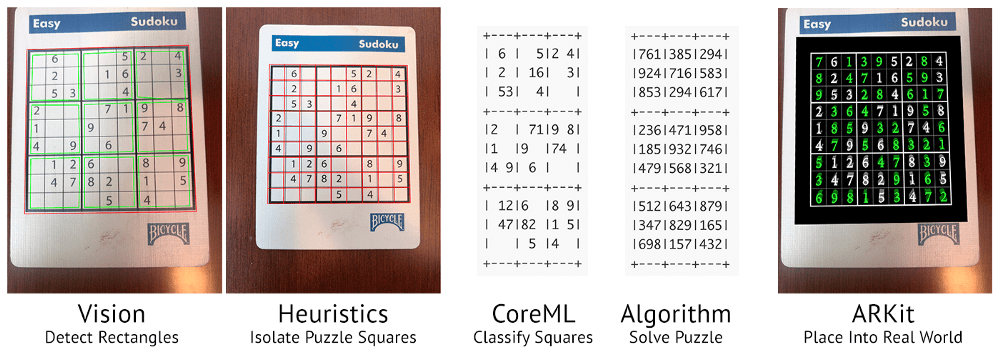
Magic Sudoku gives a magical experience when users point their phone at a Sudoku puzzle: the puzzle is instantaneously solved and displayed on their screen. In several seconds, the following occurs behind the scenes:
“One of the original reasons I chose a Sudoku solver as our first AR app was that I knew classifying digits is basically the “hello world” of Machine Learning. I wanted to dip my toe in the water of Machine Learning while working on a real-world problem. This seemed like a realistic app to tackle.” – Brad Dwyer, Founder at Hatchlings
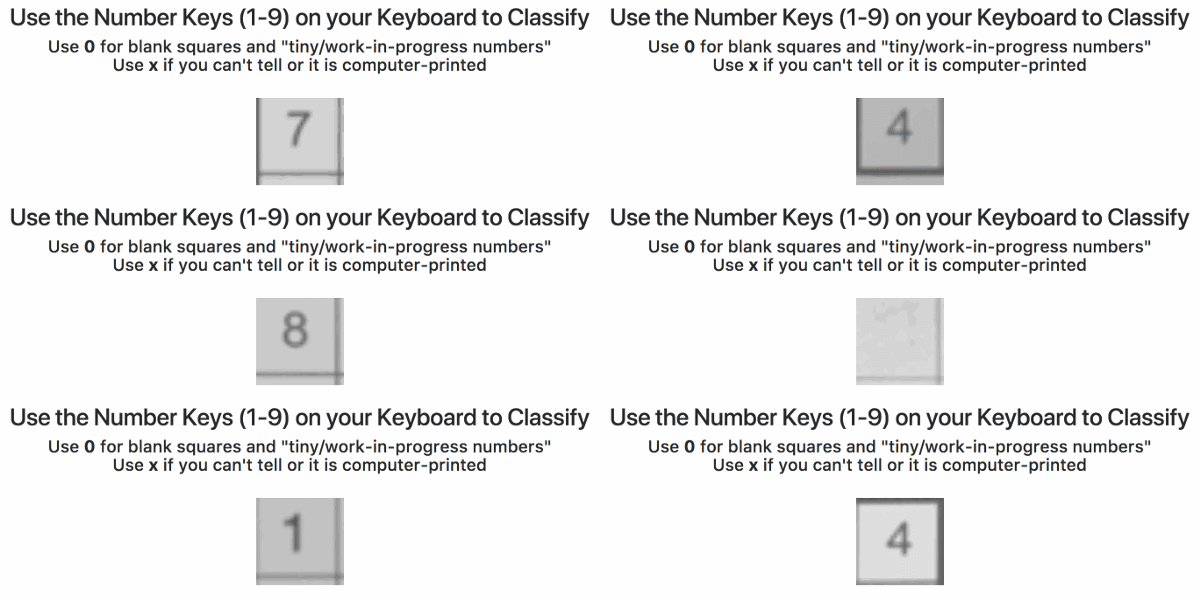
Particularly the training process of the app interested me. In his blog, Brad explains how they bought out the entire stock of Sudoku books of a specific bookstore and, with the help of his team, ripped each book apart to scan each small square with a number and upload in to a server. In the end, this server contained about 600,000 images, but all were completely unlabeled. Via a simple game, they asked Hatchlings users to classify these images by pressing the number keys on their keyboard. Within 24 hours, all 600,000 images were classified!
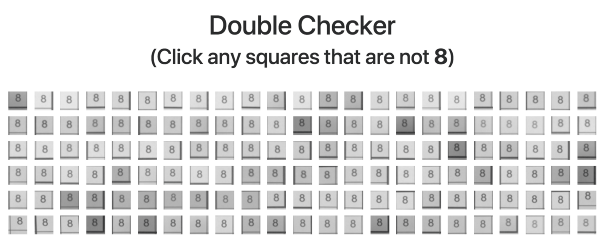
Nevertheless, some users had misunderstood the task (or just plainly ignored it) and as a consequence there were still a significant number of misidentified images. So Brad created a second tool that displayed 100 images of a single class to users, who where consequently asked to click the ones that didn’t match. These were subsequently thrown back into the first tool to be reclassified.
Quickly, the developers had enough verified data to add an automatic accuracy checker into both tools for future data runs. Funnily enough, they programmed it in such a way that users were periodically shown already known/classified images in order to check the validity of their inputs and determine how much to trust their answers going forward. This whole process reminds me on a blog I wrote recently, regarding human-computer interactions in reinforcement learning.
For several more weeks, users classified more scanned data so that, by the time the app was launched, it had been trained on over a million images of Sudoku squares. The results were amazing as the application had a 98.6% accuracy on launch (currently above 99% accuracy). One minor deficit was that the app was trained on paper Sudoku’s. However, when it aired, many users wanted to quickly test it and searched for Sudoku images on Google, which the app wouldn’t process that well.
“Problem number one was that our machine learning model was only trained on paper puzzles; it didn’t know what to think about pixels on a screen. I pulled an all nighter that first week and re-trained our model with puzzles on computer screens.
Problem number two was that ARKit only supports horizontal planes like tables and floors (not vertical planes like computer monitors). Solving this was a trickier problem but I did come up with a hacky workaround. I used a combination of some heuristics and FeaturePoint detection to place puzzles on non-horizontal planes.” – Brad Dwyer, Founder at Hatchlings
Searching and applying to jobs can be a costly activity, requiring many hours upon hours of perfecting your motivation letter and CV. Hence, it can be very frustrating to get ghosted (not receiving a reply) for a job. Luckily, Talent Works is able to give us some general tips when it comes to improving the success of your applications. You might remember them from their Interactive Map of the US Job Market.
Using a sample of about 1600 job applications, Talent Works recently conducted all kinds of statistical analyses to look at the hiring process. For instance, they examined the time it takes to get from the application stage to your first day on the job. Split out for various jobs, it seems Mechanical Engineers spend quite a while in the interview stage whereas Software developers are put to work within three weeks.
The numbers of days spent in each application stage per job (Talent.Works)
In a different analysis, Talent Works examined how to minimize your risk of getting ghosted on a job application. For instance, they found that during the “Golden Hours” (the first 96 hours after a job gets posted), your chances of getting an invitation for an interview are up to 8 times higher than afterwards.
If you submit a job application in the first 96 hours, you’re up to 8x more likely to get an interview. After that, every day you wait reduces your chances by 28% (Talent.Works)
Based on the above they come to the following three timeframes in the application cycle:
“Golden Hours”: Applications submitted between 2-4 days after a job is posted have the highest chance of getting an interview. Not only is there a difference, there’s a big difference: you have up to an 8x higher chance of getting an interview during this period, even if you’re submitting the same application.
Twilight Zone: Chances quickly decrease from OK to really bad: every day you wait after the “Golden Hours” reduces your chances by 28%. The longer you wait, the higher the risk that employers have already checked their inboxes and setup interviews with candidates that met their “good enough”-bar.
Resume Blackhole: According to Talent.Works it’s nearly not worth applying after 10 days. On average, job applications during this phase have a meager ~1.5% of getting an interview. Put another way, if you send out 50 job applications, you might hear back from one (if you’re lucky).
Next, Talent.Works investigated on a more granular level what would then be the best time to apply for a job.This resulted in the following figure
The best time to apply for a job is between 6am and 10am. During this time, you have an 13% chance of getting an interview — nearly 5x as if you applied to the same job after work. Whatever you do, don’t apply after 4pm (Talent.Works)
Again, they provide a summary of their conclusions:
The best time to apply for a job is between 6am and 10am. During this time, you have an 13% chance of getting an interview.
After that morning window, your interview odds start falling by 10% every 30 minutes. If you’re late, you’re going to pay dearly.
There’s a brief reprieve during lunchtime, where your odds climb back up to 11% at around 12:30pm but then start falling precipitously again.
The single-worst time to apply for a job is after work — if you apply at 7:30pm, you have less than a 3% chance of getting an interview.
If you want to see more, please visit Talent.Works. Here, you can let them process your CV and help you improve your hiring chances (see also this blog post).
Reinforcement learning is an area of machine learning inspired by behavioral psychology, concerned with how software agents ought to take actions in an environment so as to maximize some notion of cumulative reward (Wikipedia, 2017). Normally, reinforcement learning occurs autonomously. Here, algorithms will seek to minimize/maximize a score that is estimated via predefined constraints. As such, algorithms can thus learn to perform the most effective actions (those that minimize/maximize the score) by repeatedly experimenting and assessing strategies.
The approach in the video below is radically different. Instead of a pre-defined scoring, human-computer interaction is used to assign each action sequence (each iteration/experiment) a score. This approach is particularly useful for complex behaviors, such as a back-flip, for which it is hard to pre-define the constraints and actions that lead to the “most effective” back-flip. However, for us humans, it is relatively easy to recognize a good back-flip when we see one. The video below shows how the researchers therefore integrated a human-computer interaction in their reinforcement learning algorithm. After observing the algorithm perform a sequence of actions, a human actor indicates to what extent the goal (i.e., a backflip) is achieved or not. This human assessment thus functions as the score which the algorithm will try to minimize/maximize.
This approach can be really valuable for organizations seeking to improve their machine learning application. The paper on the principle (Deep Reinforcement Learning from Human Preferences) can be found here. The scholars conclude that this supervised approach based on human preferences has very good training results whereas the cost are similar the simple bulldozer approach of training a neural net from scratch using GPU servers.
Jack Zhao from Small Multiples – a multidisciplinary team of data specialists, designers and developers – retrieved the Language Spoken at Home (LANP) data from the 2016 Census and turned it into a dot density map that vividly shows how people from different cultures coexist (or not) in ultra high resolution (using Python, englewood library, QGIS, Carto). Each colored dot in the visualizations below represents five people from the same language group in the area. Highly populated areas have a higher density of dots; while language diversity is shown through the number of different colors in the given area.
Good news: the maps are interactive! Here’s Sydney:
Eastern Asian: Chinese, Japanese, Korean, Other Eastern Asian Languages
Southeast Asian: Burmese and Related Languages, Hmong-Mien, Mon-Khmer, Tai, Southeast Asian Austronesian Languages, Other Southeast Asian Languages
Southern Asian: Dravidian, Indo-Aryan, Other Southern Asian Languages
Southwest And Central Asian: Iranic, Middle Eastern Semitic Languages, Turkic, Other Southwest and Central Asian Languages
Northern European: Celtic, English, German and Related Languages, Dutch and Related Languages, Scandinavian, Finnish and Related Languages
Southern European: French, Greek, Iberian Romance, Italian, Maltese, Other Southern European Languages
Eastern European: Baltic, Hungarian, East Slavic, South Slavic, West Slavic, Other Eastern European Languages
Australian Indigenous: Arnhem Land and Daly River Region Languages, Yolngu Matha, Cape York Peninsula Languages, Torres Strait Island Languages, Northern Desert Fringe Area Languages, Arandic, Western Desert Languages, Kimberley Area Languages, Other Australian Indigenous Languages
The below reiterates and summarizes this Stat article.
Recently, I addressed how bias may slip into Machine Learning applications and this weekend I came across another real-life example: IBM’s Watson, specifically Watson for Oncology. With a single machine, IBM intended to tackle humanity’s most vexing diseases and revolutionize medicine and they quickly zeroed in on a high-profile target: cancer.
However, three years later now, a STAT investigation has found that the supercomputer isn’t living up to the lofty expectations IBM created for it. IBM claims that, through Artificial Intelligence, Watson for Oncology can generate new insights and identify “new approaches” to cancer care. However, the STAT investigation (video below) concludes that the system doesn’t create new knowledge and is artificially intelligent only in the most rudimentary sense of the term. Similarly, cancer specialists using the product argue Watson is still in its “toddler stage” when it comes to oncology.
Let’s start with the positive side. For specific treatments, Watson can scan academic literature, immediately providing the “best data” about a treatment — survival rates, for example — thereby relieving doctors of tedious literature searches. Due to this transparency, Watson may level the hierarchy commonly found in hospital settings, by holding (senior) doctors accountable to the data and empowering junior physicians to back up their arguments. Furthermore, Watson’s information may empower patients as they can be offered a comprehensive packet of treatment options, including potential treatment plans along with relevant scientific articles. Patients can do their own research about these treatments, and maybe even disagree with the doctor about the right course of action.
Although study results demonstrate that Watson saves doctors time and can have a high concordance rate with their treatment recommendations, much more research is needed. The studies were all conference abstracts, which haven’t been published in peer-reviewed journals — and all but one was either conducted by a paying customer or included IBM staff on the author list, or both. More importantly, IBM has failed to exposed Watson for Oncology to critical review by outside scientists nor have they conducted clinical trials to assess its effectiveness. It would be very interesting to examine whether Watson’s implementation is actually saving lives or making healthcare more efficient/effective.
IBM Watson HealthSuch validation is especially necessary because several issues are identified. First, the actual capabilities of Watson for Oncology are not well-understood by the public, and even by some of the hospitals that use it. It’s taken nearly six years of painstaking work by data engineers and doctors to train Watson in just seven types of cancer, and keep the system updated with the latest knowledge. Moreover, because of the complexity of the underlying machine learning algorithms, the recommendations Watson puts out are a black box, and Watson can not provide the specific reasons for picking treatment A over treatment B.
Second, the system is essentially Memorial Sloan Kettering in a portable box. IBM celebrates Memorial Sloan Kettering’s role as the only trainer of Watson. After all, who better to educate the system than doctors at one of the world’s most renowned cancer hospitals? However, doctors claim that Memorial Sloan Kettering’s training has caused bias in the system, because the treatment recommendations it puts into Watson don’t always comport with the practices of doctors elsewhere in the world. When users ask Watson for advice, the system also searches published literature — some of which is curated by Memorial Sloan Kettering — to provide relevant studies and background information to support its recommendation. But the recommendation itself is derived from the training provided by the hospital’s doctors, not the outside literature.
Doctors at Memorial Sloan Kettering acknowledged their influence on Watson. “We are not at all hesitant about inserting our bias, because I think our bias is based on the next best thing to prospective randomized trials, which is having a vast amount of experience,” said Dr. Andrew Seidman, one of the hospital’s lead trainers of Watson. “So it’s a very unapologetic bias.”
However, this bias causes serious problems when Watson for Oncology is implemented in other countries/hospitals. The generally affluent population treated at Memorial Sloan Kettering doesn’t reflect the diversity of people around the world. According to Martijn van Oijen, an epidemiologist and associate professor at Academic Medical Center in the Netherlands, Watson has not been implemented in because of country level differences in treatment approaches. Similarly, oncologists at one hospital in Denmark said they have dropped implementation altogether after finding that local doctors agreed with Watson in only about 33 percent of cases. Different problems occurred in South Korea, where researchers reported that the treatment Watson most often recommended for breast cancer patients simply wasn’t covered by their national insurance system.
Kris, the lead trainer at Memorial Sloan Kettering, says nobody wants to hear the problems. “All they want to hear is that Watson is the answer. And it always has the right answer, and you get it right away, and it will be cheaper. But like anything else, it’s kind of human.”









![imaging-video[1].jpg](https://paulvanderlaken.com/wp-content/uploads/2017/09/imaging-video1.jpg?w=1108)
 paulvanderlaken.com