AutoML-Zero: Evolving Machine Learning Algorithms From Scratch

AutoML-Zero: Evolving Machine Learning Algorithms From Scratch

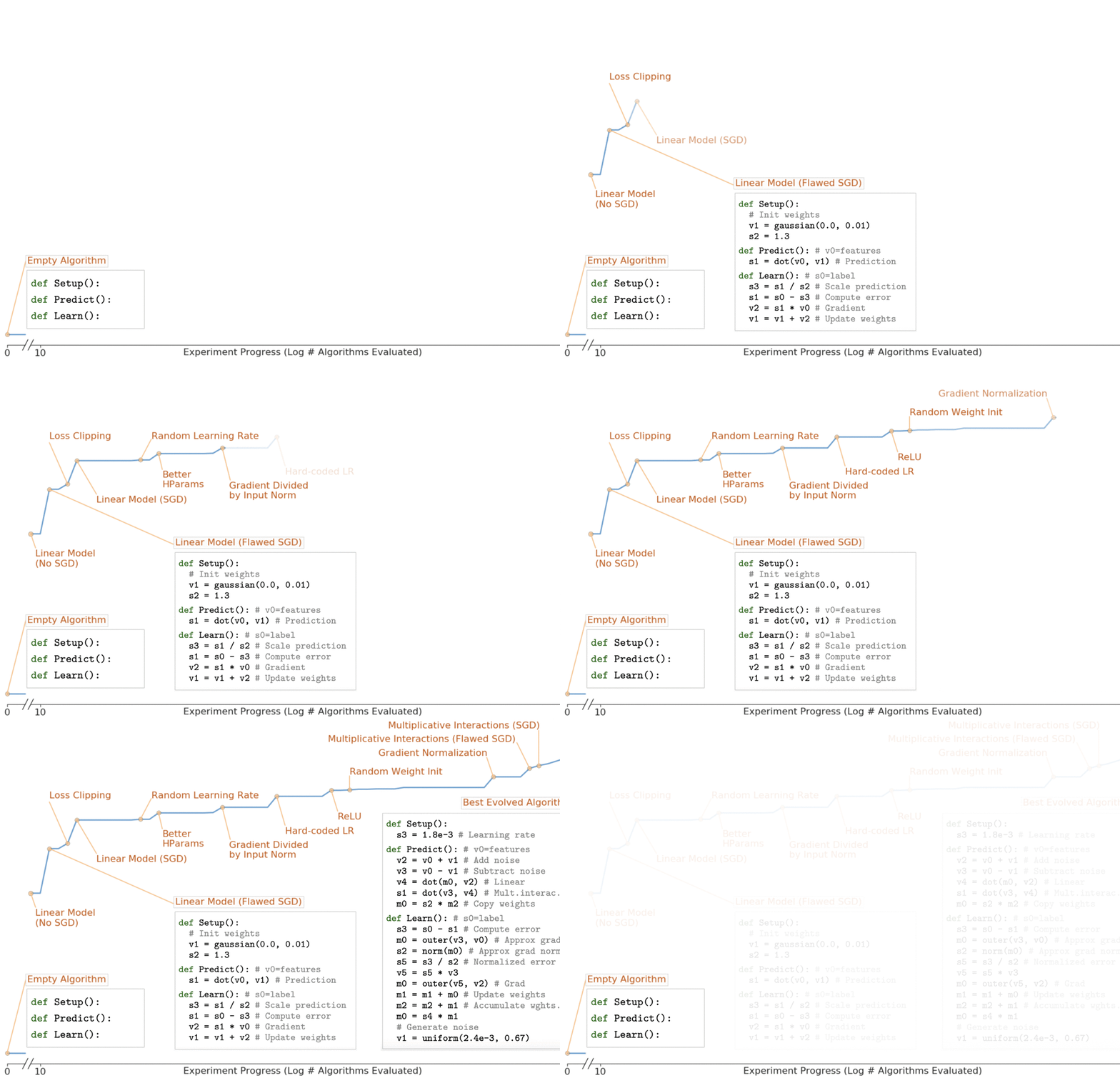
Google Brain researchers published this amazing paper, with accompanying GIF where they show the true power of AutoML.

AutoML stands for automated machine learning, and basically refers to an algorithm autonomously building the best machine learning model for a given problem.

This task of selecting the best ML model is difficult as it is. There are many different ML algorithms to choose from, and each of these has many different settings ([hyper]parameters) you can change to optimalize the model’s predictions.

For instance, let’s look at one specific ML algorithm: the neural network. Not only can we try out millions of different neural network architectures (ways in which the nodes and lyers of a network are connected), but each of these we can test with different loss functions, learning rates, dropout rates, et cetera. And this is only one algorithm!

In their new paper, the Google Brain scholars display how they managed to automatically discover complete machine learning algorithms just using basic mathematical operations as building blocks. Using evolutionary principles, they have developed an AutoML framework that tailors its own algorithms and architectures to best fit the data and problem at hand.

This is AI research at its finest, and the results are truly remarkable!

GIF for the interpretation of the best evolved algorithm

You can read the full paper open access here: https://arxiv.org/abs/2003.03384 (quick download link)

The original code is posted here on github: github.com/google-research/google-research/tree/master/automl_zero#automl-zero

GIF for the experiment progress
Solutions to working with small sample sizes

Solutions to working with small sample sizes

Both in science and business, we often experience difficulties collecting enough data to test our hypotheses, either because target groups are small or hard to access, or because data collection entails prohibitive costs.

Such obstacles may result in data sets that are too small for the complexity of the statistical model needed to answer the questions we’re really interested in.

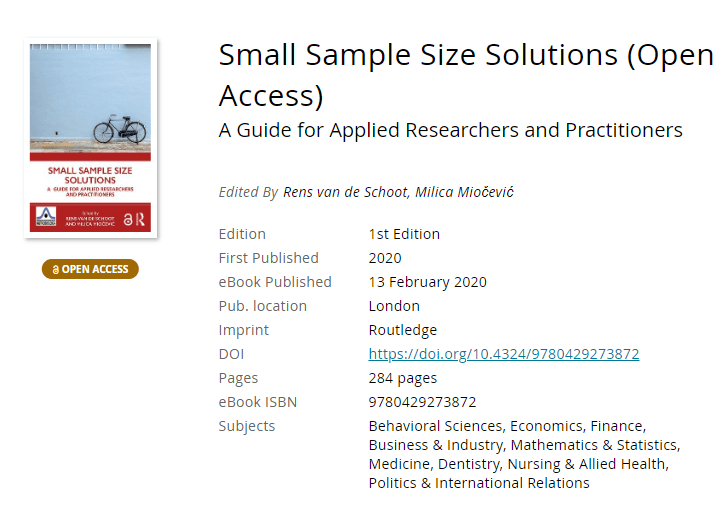
Several scholars teamed up and wrote this open access book: Small Sample Size Solutions.

This unique book provides guidelines and tools for implementing solutions to issues that arise in small sample studies. Each chapter illustrates statistical methods that allow researchers and analysts to apply the optimal statistical model for their research question when the sample is too small.

This book will enable anyone working with data to test their hypotheses even when the statistical model required for answering their questions are too complex for the sample sizes they can collect. The covered statistical models range from the estimation of a population mean to models with latent variables and nested observations, and solutions include both classical and Bayesian methods. All proposed solutions are described in steps researchers can implement with their own data and are accompanied with annotated syntax in R.

You can access the book for free here!

Become a SELECT Star: SQL explained intuitively

Become a SELECT Star: SQL explained intuitively

Julia Evans writes programming magazines that explain languages and concepts intuitively.

Julia been sharing her SQL learning bits on twitter for a while, but now collected them in this amazing 28-page magazine.

Afbeelding

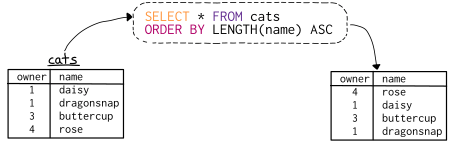
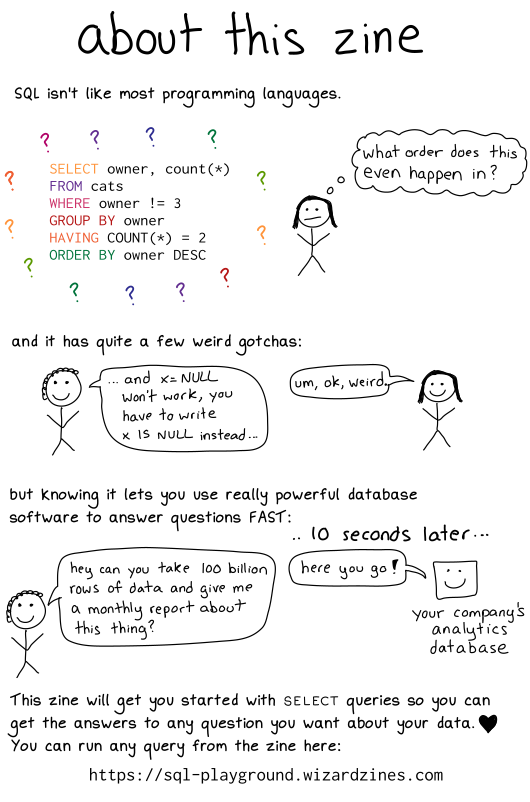
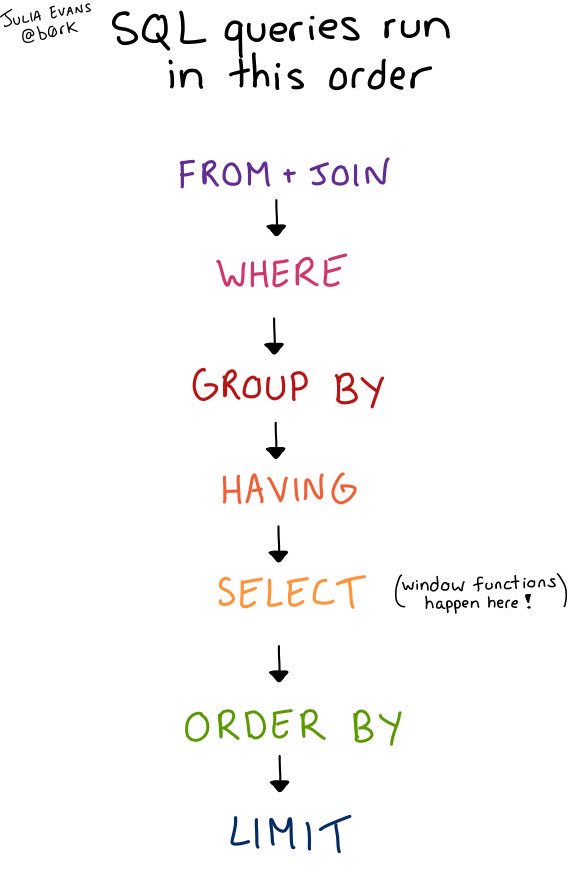
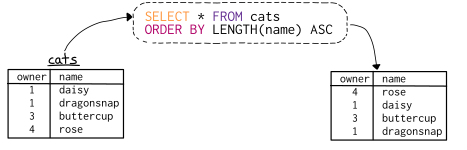
This zine explains SELECT queries step by step with tons of examples that will show you exactly what’s happening when you run a query. You’ll be able to easily translate your questions about your data into queries and get answers fast.

Julia Evans (via)

The magazine will set you back 12 dollars, but will make you a SQL master in no time. Plus, you will always have a cheat sheet by hand! Here’s what’s in it:

Here’s some of the actual contents you can expect, via Julia’s Twitter and the original webpage:

Image result for sql become a select star

The title of the magazine is also quite well thought out : ) I hope you enjoy it!

A new blog post every Tuesday!

A new blog post every Tuesday!

Hi dear readers!

I’ve been blogging for just over three years now. Writing my first blogs in January 2017 in a small café in London out of pastime, I had never imagined that I would actually attract a readership. And while my blog grew in visitors and followers, it always remained just a hobby for me to summarize and post stuff I was reading or working on at the time.

Still, I want to make sure that you — my readership — get the most out of the time I invest in my blogs. Some blogs are more interesting than others, I am aware. However, I notice that it’s not only the content, but also the time and momentum of posting that draws in you readers.

Hence, I propose the following: Rather than erratically posting everything at the time of writing, I’m going to provide you with some regularity. As of today…

I will post a new blog every Tuesday, at 15:00 GMT+1

“Why that specific time?” I hear you asking. Well, it’s the perfect time as all my followers are still awake on the same day!

  • My Asian followers can read the blog just before or in bed,
  • My African and European readers can look forward to their commute home, and
  • My North- and South-American fans can enjoy it with their morning coffee!

Join 385 other subscribers

Over the course of last year, I posted nearly 100 blogs. If you do some quick maths, you will conclude that 1 post every Tuesday is a lot less.

And this is where you come in:

Please let me know at what time you would prefer to have me post a second blog every (other) week. You can do so in the comments, by sending me a direct message, or by reaching out to me on twitter or LinkedIn.

Image via uoe.co.uk/uoe-post-office-services

Probability Distributions mapped and explained by their relationships

Probability Distributions mapped and explained by their relationships

Sean Owen created this handy cheat sheet that shows the most common probability distributions mapped by their underlying relationships.

Probability distributions are fundamental to statistics, just like data structures are to computer science. They’re the place to start studying if you mean to talk like a data scientist. 

Sean Owen (via)

Owen argues that the probability distributions relate to each other in intuitive and interesting ways that makes it easier for you to recall them. For instance, several follow naturally from the Bernoulli distribution. Having this map by hand should thus help you really understand what these distributions imply.

On top of that, it’s just a nice geeky network poster!

Sean’s map of the relationships between probability distributions (via)

Now, Sean didn’t just make a fancy map. In the original blog he also explains each of the distributions and how it relates to the others. Having this knowledge is vital to being a good data scientist / analyst.

You can sometimes get away with simple analysis using R or scikit-learn without quite understanding distributions, just like you can manage a Java program without understanding hash functions. But it would soon end in tears, bugs, bogus results, or worse: sighs and eye-rolling from stats majors.

Sean Owen (via)

For instance, here’s Sean explaining the Binomial distribution:

The binomial distribution may be thought of as the sum of outcomes of things that follow a Bernoulli distribution. Toss a fair coin 20 times; how many times does it come up heads? This count is an outcome that follows the binomial distribution. Its parameters are n, the number of trials, and p, the probability of a “success” (here: heads, or 1). Each flip is a Bernoulli-distributed outcome, or trial. Reach for the binomial distribution when counting the number of successes in things that act like a coin flip, where each flip is independent and has the same probability of success.

Sean Owen (via)

Header image via Alison-Static

Simulating data with Bayesian networks, by Daniel Oehm

Simulating data with Bayesian networks, by Daniel Oehm

Daniel Oehm wrote this interesting blog about how to simulate realistic data using a Bayesian network.

Bayesian networks are a type of probabilistic graphical model that uses Bayesian inference for probability computations. Bayesian networks aim to model conditional dependence, and therefore causation, by representing conditional dependence by edges in a directed graph. Through these relationships, one can efficiently conduct inference on the random variables in the graph through the use of factors.

Devin Soni via Medium

As Bayes nets represent data as a probabilistic graph, it is very easy to use that structure to simulate new data that demonstrate the realistic patterns of the underlying causal system. Daniel’s post shows how to do this with bnlearn.

Daniel’s example Bayes net

New data is simulated from a Bayes net (see above) by first sampling from each of the root nodes, in this case sex. Then followed by the children conditional on their parent(s) (e.g. sport | sex and hg | sex) until data for all nodes has been drawn. The numbers on the nodes below indicate the sequence in which the data is simulated, noting that rcc is the terminal node.

Daniel Oehms in his blog

The original and simulated datasets are compared in a couple of ways 1) observing the distributions of the variables 2) comparing the output from various models and 3) comparing conditional probability queries. The third test is more of a sanity check. If the data is generated from the original Bayes net then a new one fit on the simulated data should be approximately the same. The more rows we generate the closer the parameters will be to the original values.

The original data alongside the generated data in Daniel’s example

As you can see, a Bayesian network allows you to generate data that looks, feels, and behaves a lot like the data on which you based your network on in the first place.

This can be super useful if you want to generate a synthetic / fake / artificial dataset without sharing personal or sensitive data.

Moreover, the underlying Bayesian net can be very useful to compute missing values. In Daniel’s example, he left out some values on purpose (pretending they were missing) and imputed them with the Bayes net. He found that the imputed values for the missing data points were quite close to the original ones:

For two variables, the original values plotted against the imputed replacements.

In the original blog, Daniel goes on to show how to further check the integrity of the simulated data using statistical models and shares all his code so you can try this out yourself. Please do give his website a visit as Daniel has many more interesting statistics blogs!