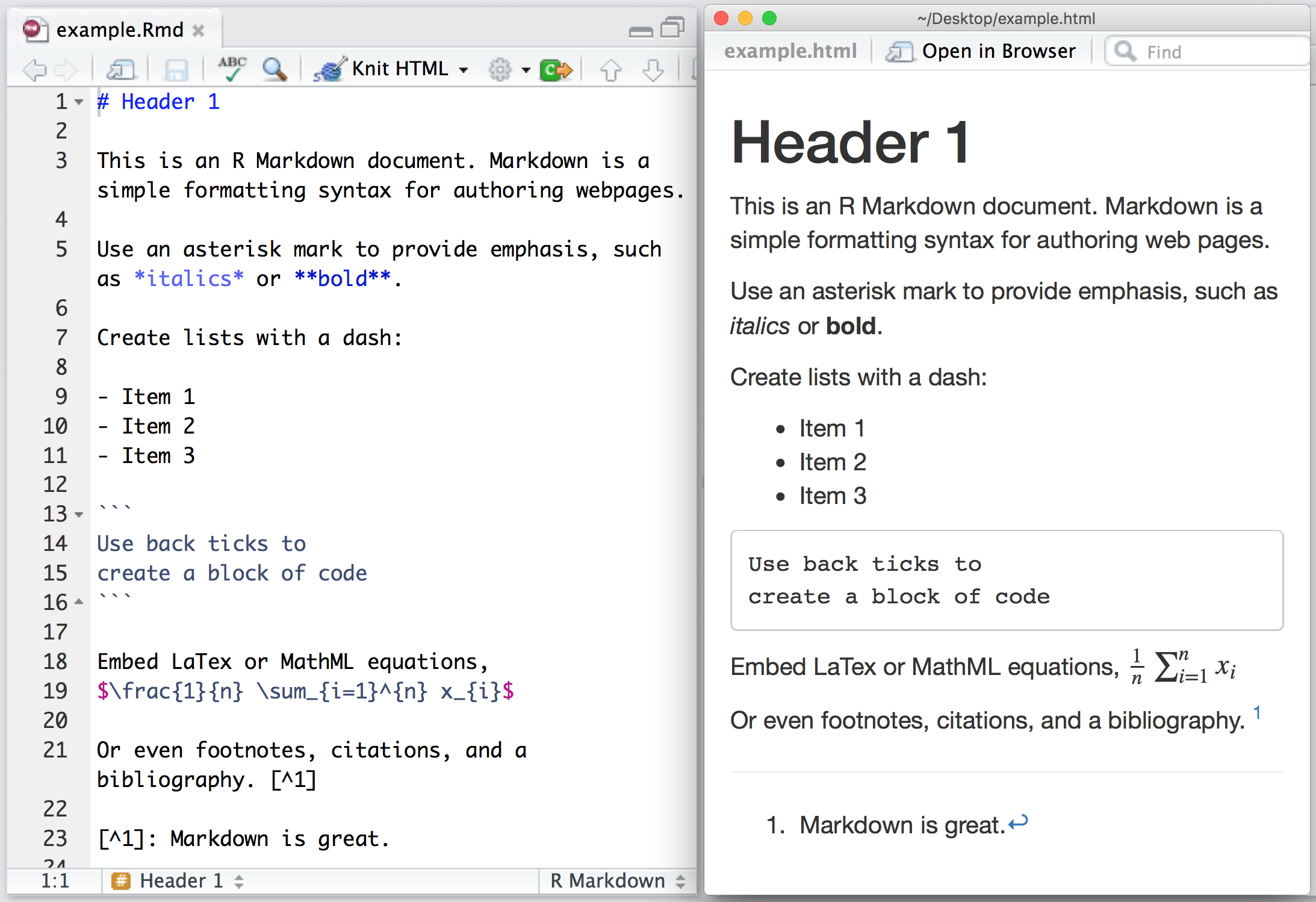
Yan Holtz recently created a neat little overview of handy R Markdown tips and tricks that improve the appearance of output documents. He dubbed this overview Pimp my RMD. Have a look, it’s worth it!
Ever wondered what it is like to program computer games?
Or even better, what it is like to program programs that program your computer games for you? Then welcome to the wonderful world of procedural game design, such as Spore, Borderlands, and No Man’s Sky.
Recently, I have been watching and greatly enjoying this Youtube playlist of the South-African Sebastian Lague. In a series of nine videos, Sebastian programs a procedural cave generator from scratch. The program generates a pseudo-random cave, following some sensible constraints, everytime its triggered.
The following is Sebastian’s first video in the series labeled: Learn how to create procedurally generated caverns/dungeons for your games using cellular automata and marching squares.
More in line with my blog’s main topics, Sebastian also hosts a series on neural networks, which I will most probably watch and report on over the course of the coming weeks:
[Awful A.I.] aims to track all of them. We hope that Awful AI can be a platform to spur discussion for the development of possible contestational technology (to fight back!).
The Awful A.I. list contains a few dozen applications of machine learning where the results were less than optimal for several involved parties. These AI solutions either resulted in discrimination, disinformation (fake news), mass surveillance, or severely violate privacy or ethical issues in many other ways.
We’ve all heard of Cambridge Analytica, but there are many more on this Awful A.I. list:
Deep Fakes – Deep Fakes is an artificial intelligence-based human image synthesis technique. It is used to combine and superimpose existing images and videos onto source images or videos. Deepfakes may be used to create fake celebrity pornographic videos or revenge porn. [AI assisted fake porn][CNN Interactive Report]
Social Credit System – Using a secret algorithm, Sesame credit constantly scores people from 350 to 950, and its ratings are based on factors including considerations of “interpersonal relationships” and consumer habits. [summary][Foreign Correspondent (video)][travel ban]
SenseTime & Megvii– Based on Face Recognition technology powered by deep learning algorithm, SenseFace and Megvii provides integrated solutions of intelligent video analysis, which functions in target surveillance, trajectory analysis, population management. [summary][forbes][The Economist (video)]
David Dao is a PhD student at DS3Lab — the computer science dpt. of Zurich — and maintains the awful AI list. The cover photo was created by LargeStupidity on Drawception
This specific link has been on my to-do list for so-long now that I’ve decided to just share it without any further ado.
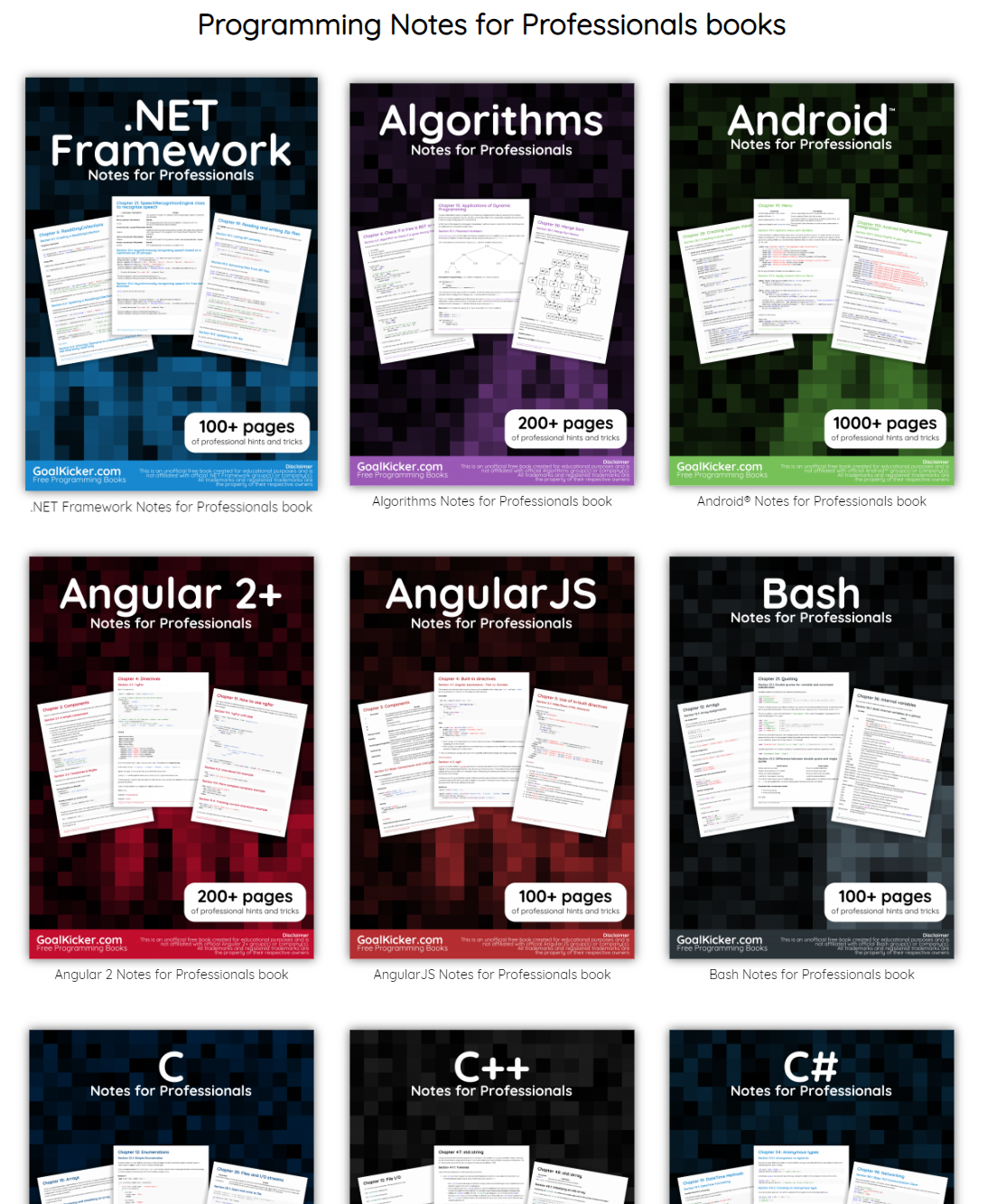
The people behind GoalKicker, for whatever reason, decided to compile nearly 100 books on different programming languages based on among others StackOverflow entries. Their open access library contains books on languages from Latex to Linux, from Java to JavaScript, from SQL to MySQL, and from C, to C++, C#, and objective-C.
A while back I discovered this free game called Screeps: an RTS colony-simulation game specifically directed AI programmers. I was immediately intrigued by the concept, but it took me a while to find the time and courage to play. When I finally got to playing though, I lost myself in the game for several days on end.
Screeps means “scripting creeps.”
It’s an open-source sandbox MMO RTS game for programmers, wherein the core mechanic is programming your units’ AI. You control your colony by writing JavaScript which operate 24/7 in the single persistent real-time world filled by other players on par with you.
Basically, screeps is very little game. You start with in a randomly generated canyon of some 400 by 400 pixels, with nothing more than some basic resources and your base. Nothing fun will happen. Even better, nothing at all will happen. Unless you program it yourself.
As a player, it is your job to “script” your own creeps’ AI. And your buildings AI for that matter. You will need to write a program that makes your base spawn workers. And next those workers will need to be programmed to actually work. You need to direct them to go to the resources, explain them how to mine the resources, when to stop mining, and how to return the mined resources to your base. You will probably also want some soldiers and some other defenses, so those need to be spawned with their own special instructions as well.
Everything needs to be scripted well, as the game (and thus your screeps) runs on special servers, 24/7, so also when you are not playing yourself. Truly your personal, virtual, mini-AI colony.
The programming mostly occurs in JavaScript. This can be difficult for those like myself who do not know JavaScript, but even I managed to have some basic workers running up and down my screen in a matter of hours. Step by step, you will learn (be forced) to create different worker types (harvesters, builders, repairmen, and even some stupid soldiers) and even some basic colony management scripts (spawning workers, spending resources, upgrading stuff). In the mean time, you will silently learn some JavaScript while playing. As I put in more and more hours, I could even see how to improve on my earlier scripts. This makes screeps a fun and rewarding gaming and learning experience.
Do expect to run into frustrations though! If you’re no JavaScript expert you will personally create a lot of bugs. Of which the game by default send you messages, as your colony will get stuck overnight. Moreover, you will likely need to Google every single thing you want to do at the start. I found great help in this YouTube tutorial to get me started. Finally, you are only under nooby-protection for the first so-many hours, after which you will quickly get slaughtered by all the advanced multi-CPU players on the servers.
Heck, it was fun while it lasted : )
PS. I read here that, using WebAssembly, one could also compile code written in different languages and run it in Screeps: C/C++ or Rust code, as well as other supported languages.
JS13K Games is a competition where developers are challenged to create an entire game using less than 13 kilobytes of memory. Creative developer Matt Deslaudiers participated and created Bellwoods: an art game for mobile and desktop that you can play in your browser.
The concept of the game is simple: fly your kite through endless fields of colour and sound, trying to discover new worlds. To remain under 13kb, all of the graphics and audio in Bellwoods are procedurally generated. The game was mostly programmed in JavaScript with minimal custom HTML/CSS. Matt’s motivation and the actual development you can read about in his original blog. The source code the game, Matt also shared on GitHub.
Mélissa Hernandez, a French UX and Interaction Designer, helped Matt design this beautiful game. Together, they even versed a haiku that not only evokes the mood of the game, but also provides some subtle gameplay instructions:
over the tall grass following birds, chasing wind in search of color







 paulvanderlaken.com